
GHK-Cu: cream or injection? How to choose
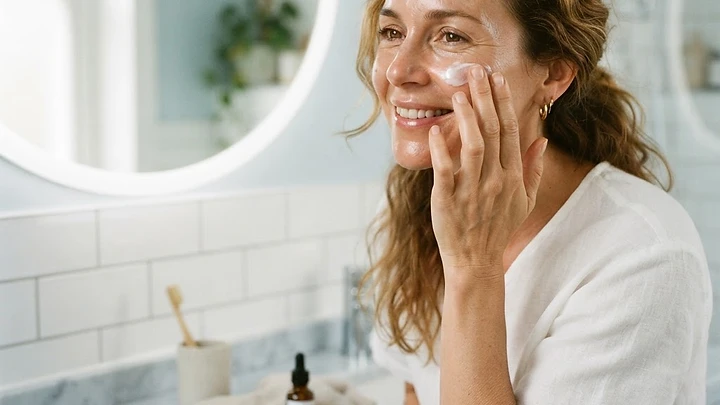
If you follow skincare creators, longevity podcasts, or peptide discussions online, you've seen GHK-Cu called one of the most intriguing compounds in modern skin science. Unlike most trending ingredients, it isn't new — researchers have studied this naturally occurring copper peptide for decades for its role in tissue biology, wound healing, and skin health. One question comes up again and again: cream or injections? The answer depends on what you're hoping to support. At Opimus Health, GHK-Cu cream, GHK-Cu injections, and the Glow Stack are all clinician supervised and prepared by state-licensed US compounding pharmacies — so you can choose based on your goals, not marketing hype.
What is GHK-Cu?
GHK-Cu (glycyl-L-histidyl-L-lysine copper) is a naturally occurring copper-binding peptide found in the human body. First identified in human plasma, it has since been detected in tissues including skin and saliva, and researchers have investigated its role in normal tissue maintenance, wound healing, and cellular signaling. Because peptides act as biological messengers, GHK-Cu has drawn attention for its potential influence on skin appearance, connective tissue biology, tissue repair, and healthy aging. The science is promising, but many proposed applications are still being investigated and more human research is needed.
Why GHK-Cu appears in longevity conversations
Part of the interest is simple: natural GHK-Cu levels appear to decline with age. Researchers believe that decline may be associated with age-related changes in normal tissue maintenance and repair, which has led to interest in whether clinician-supervised GHK-Cu therapy may help support healthy skin and overall wellness. Those relationships are still being studied, and declining GHK-Cu is only one piece of the complex biology of aging.
Why it's so popular in skincare
Laboratory and preclinical research has explored GHK-Cu's effects on skin biology, including its potential role in supporting skin remodeling, collagen-related processes, skin elasticity, tissue repair, and healthy skin appearance. Those findings generated real enthusiasm — but questions remain about optimal use, dosing, and long-term outcomes in humans. As with any emerging therapy, encouraging research and proven clinical outcomes aren't the same thing.
GHK-Cu cream — targeted skin support
For many people, topical is the most intuitive place to start. A compounded GHK-Cu cream is applied where you want it, which appeals to those focused primarily on skin concerns:
- Skin texture
- Skin firmness
- Overall skin appearance
- Healthy-aging skincare routines
- Specific areas of concern
The Opimus formulation is a 0.5% compounded GHK-Cu cream built with four active ingredients selected to complement one another in a clinician-supervised protocol, prepared by a state-licensed US compounding pharmacy. Always use it exactly as prescribed and follow your clinician's application instructions.
GHK-Cu injections — a systemic approach
Injectable GHK-Cu takes a different route. Rather than targeting one area of skin, it's typically chosen by people interested in a more systemic, clinician-supervised peptide protocol — often those focused on healthy aging, broader peptide protocols, or whole-body wellness. Because administration is systemic, injections are generally considered within a wider clinical treatment plan rather than as a replacement for topical skincare. Individual responses vary and research continues to evolve.
Cream vs. injection: the real difference
Both contain GHK-Cu, but they're designed with different goals in mind:
| GHK-Cu cream | GHK-Cu injection | |
|---|---|---|
| Primary focus | Localized skin support | Systemic peptide therapy |
| Administration | Applied to the skin | Injected as prescribed |
| Best suited for | Skin texture, firmness, appearance | Broader wellness and longevity goals |
| Routine | Topical skincare | Clinician-supervised injection protocol |
| Clinician oversight | Yes | Yes |
| Licensed US pharmacy | Yes | Yes |
Neither option is universally better — the right choice depends on whether your priority is targeted skincare or a broader peptide strategy.
A third option: the Glow Stack
Some people aren't only interested in skin — they're also focused on recovery and whole-body wellness. The Glow Stack combines clinician-supervised peptides into a protocol built for people who want support for healthy skin appearance and recovery-focused goals together. If your primary goal is facial skin appearance, a GHK-Cu cream may be enough. If you want a broader skin-and-recovery strategy, the Glow Stack is worth discussing with your clinician.
A simple way to decide
Match the format to what you're actually trying to accomplish:
- GHK-Cu cream — your focus is your skin: texture, firmness, localized application, and a topical routine using a compounded 0.5% cream with four actives
- GHK-Cu injections — your goals extend beyond localized skincare toward a systemic, clinician-supervised peptide approach to healthy aging
- Glow Stack — you want skin and recovery support together in one comprehensive, clinician-supervised protocol
Why clinician supervision matters
The internet has made peptides more accessible — not necessarily safer. Many online vendors sell products labeled “research use only,” “not for human consumption,” or laboratory chemicals, with little information about manufacturing standards, purity, or quality assurance. At Opimus Health, GHK-Cu therapy includes clinician supervision, ongoing clinical oversight, medications prepared by state-licensed US compounding pharmacies, and guidance based on your goals and health history — so you can explore peptide therapy with confidence in both the medication and the care behind it.
Frequently asked questions
What is GHK-Cu?
A naturally occurring copper-binding peptide studied for its role in skin biology, tissue repair, and healthy aging. Interest continues to grow, though research is still evolving in several areas.
Does GHK-Cu decline with age?
Research suggests naturally occurring levels decrease over time, which is one reason GHK-Cu has become a focus of healthy-aging research.
Should I choose GHK-Cu cream or injections?
If your primary goal is localized skin support, a topical cream may be the better fit. If you're interested in a broader clinician-supervised peptide protocol, injectable GHK-Cu may be more appropriate. Your goals and your clinician's recommendations determine the best choice.
What's in the Opimus GHK-Cu cream?
It's a 0.5% compounded GHK-Cu cream with four active ingredients, prepared by a state-licensed US compounding pharmacy. See the product page for the complete ingredient list.
What is the Glow Stack?
A clinician-supervised peptide combination for people interested in supporting both healthy skin appearance and recovery-focused wellness — a broader approach than GHK-Cu alone.
Curious if it's right for you?
Start with a short online visit — a licensed clinician reviews your history before anything is prescribed.
This article is for general information only and does not provide medical advice. Prescription products require evaluation by a licensed clinician. Individual results vary and are not guaranteed.