
Afraid of needles? How sublingual GLP-1s work
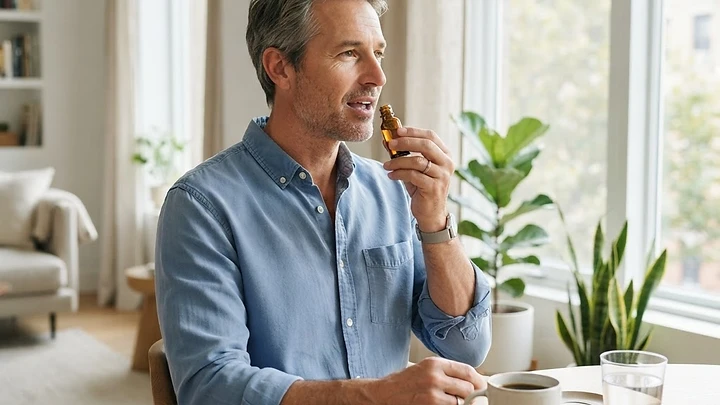
For many people the biggest obstacle to starting GLP-1 therapy isn't the medication — it's the injection. Even though most GLP-1 shots use a very small needle just once a week, the idea of giving yourself an injection is enough to delay treatment. If that sounds familiar, you're not alone, and injections aren't your only option. Sublingual semaglutide and sublingual tirzepatide are taken daily under the tongue instead of injected, offering a needle-free way to access clinician-supervised GLP-1 therapy. At Opimus Health, both are compounded by state-licensed US pharmacies with ongoing clinician oversight.
Why some people avoid GLP-1 injections
Needle anxiety is extremely common, and it's a valid reason to look at alternatives. People often prefer a non-injectable format because they:
- Have a fear of needles or dislike self-administering medication
- Prefer a daily wellness routine over a weekly injection
- Travel frequently and want something easier to pack and schedule
- Simply want a needle-free experience
The best treatment is usually the one you feel comfortable taking consistently.
What does sublingual mean?
Sublingual means “under the tongue.” Instead of swallowing the medication right away, you place it beneath your tongue and hold it there for the recommended time before swallowing any remaining liquid, if directed. The tissue under the tongue holds a rich network of blood vessels that can absorb certain medications directly into the bloodstream — a route long used across prescription medicine as an alternative to injections and swallowed tablets. For compounded GLP-1 therapy, the formulation is prepared specifically for sublingual administration.
How do sublingual GLP-1s work?
The active ingredients are the same medications you already recognize — semaglutide, a GLP-1 receptor agonist, and tirzepatide, which activates both GLP-1 and GIP receptors. Both may help regulate appetite, increase feelings of fullness, reduce cravings, and support healthier eating habits and metabolic health. The only distinction is delivery: daily sublingual dosing instead of a weekly injection.
Daily dosing vs. weekly injections
The biggest practical difference is treatment rhythm. Injectable GLP-1 therapy is administered once every seven days — one dose a week, minimal day-to-day management, easy for many people to remember. Sublingual therapy becomes part of your everyday routine instead: a consistent daily habit, no needles, taken at roughly the same time each day. Some people find daily dosing takes more planning than a once-weekly shot. Neither schedule is inherently better; the right one is the one you'll actually follow.
How is absorption different?
This is the most common question about sublingual GLP-1 therapy, and the answer is straightforward: the delivery method is different, so absorption is different too. Injections deliver medication through subcutaneous tissue, a well-established route. Sublingual formulations rely on absorption through the tissue beneath the tongue, so absorption characteristics differ and may vary between individuals. Formats are not interchangeable dose-for-dose — your clinician prescribes a regimen appropriate to the exact formulation you receive. That makes it important to take the medication exactly as directed, follow the administration instructions, stay consistent daily, and stay in contact with your prescribing clinician.
Consistency is the whole game
With a weekly injection, missing a dose is relatively uncommon simply because it only happens once every seven days. With daily sublingual therapy, consistency matters more. Anchoring it to an existing habit helps — first thing in the morning, at the same time each day, before other daily activities, and always according to the instructions provided with your prescription.
Honest trade-offs to consider
Every format has advantages and considerations. Sublingual therapy offers no needles, a daily routine that folds into existing habits, clinician supervision, and access to semaglutide or tirzepatide without self-injection. It also asks for daily consistency, careful attention to administration instructions, an understanding that absorption differs from injections, and some patience while you and your clinician evaluate how the treatment fits your goals. Neither option is universally superior — success usually depends on choosing the format you'll use consistently.
Are sublingual GLP-1s legitimate?
Yes, when obtained through appropriate clinical channels. At Opimus Health, treatments are clinician supervised, medications are compounded by state-licensed US pharmacies, each prescription is formulated for its prescribed route of administration, and you receive ongoing clinical oversight throughout treatment. Choosing a reputable provider matters — clinical oversight is what keeps therapy appropriate for your health history, goals, and response.
Injection vs. sublingual: which format fits you?
Both options use GLP-1 medications under clinician supervision. The best format depends on your preferences and lifestyle:
| Weekly injection | Daily sublingual | |
|---|---|---|
| Needles required | Yes — very small needle | No |
| Dosing schedule | Once weekly | Once daily |
| Administration | Subcutaneous injection | Under the tongue |
| Best for | Those comfortable with injections | Those who want needle-free |
| Clinician oversight | Yes | Yes |
| Licensed US pharmacy | Yes | Yes |
Choose weekly injections if you don't mind a small needle and prefer dosing just once a week. Choose daily sublingual if you want to avoid needles entirely and can reliably take medication every day. Still unsure? Pick the schedule you're more likely to follow — adherence is a big part of any long-term plan.
Why choose Opimus Health?
When choosing GLP-1 therapy, the quality of care behind the medication matters as much as the molecule. With Opimus you get clinician-supervised treatment, medications compounded by state-licensed US pharmacies, access to sublingual semaglutide and sublingual tirzepatide (in standard and microdose strengths), ongoing clinical oversight, and the flexibility to choose the format that fits your preferences.
Frequently asked questions
What is a sublingual GLP-1?
A compounded formulation of semaglutide or tirzepatide administered under the tongue rather than by injection — a needle-free option for clinician-supervised GLP-1 therapy.
Does sublingual semaglutide work differently than injectable semaglutide?
The active ingredient is the same, but the route of administration is different. Sublingual formulations are absorbed differently than injections, so they're prescribed and used according to their own dosing protocols.
Is sublingual tirzepatide a good option if I'm afraid of needles?
For people uncomfortable with injections, it may be an appealing alternative. Whether it's appropriate depends on your medical history, treatment goals, and your clinician's evaluation.
Is daily dosing harder than weekly injections?
It depends on your preferences. Some people prefer remembering one weekly injection; others find a daily routine easier to build. The best option is the one you can follow consistently.
Are sublingual GLP-1 medications clinician supervised?
Yes. At Opimus Health, sublingual semaglutide and tirzepatide are prescribed with clinician supervision, compounded by state-licensed US pharmacies, and supported with ongoing clinical oversight.
Curious if it's right for you?
Start with a short online visit — a licensed clinician reviews your history before anything is prescribed.
This article is for general information only and does not provide medical advice. Prescription products require evaluation by a licensed clinician. Individual results vary and are not guaranteed.